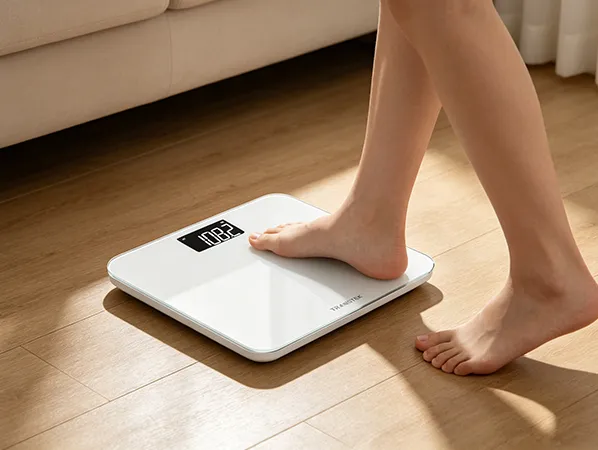
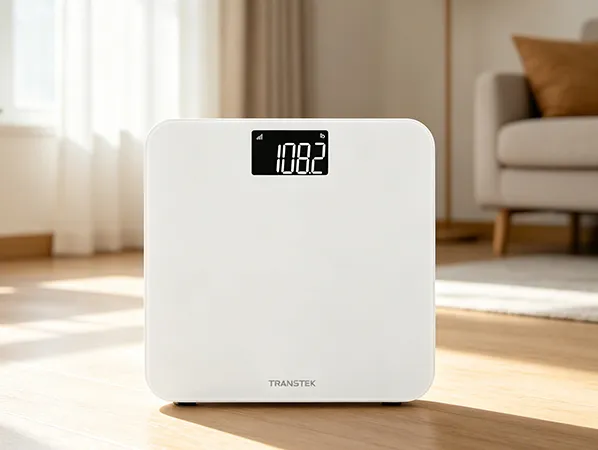
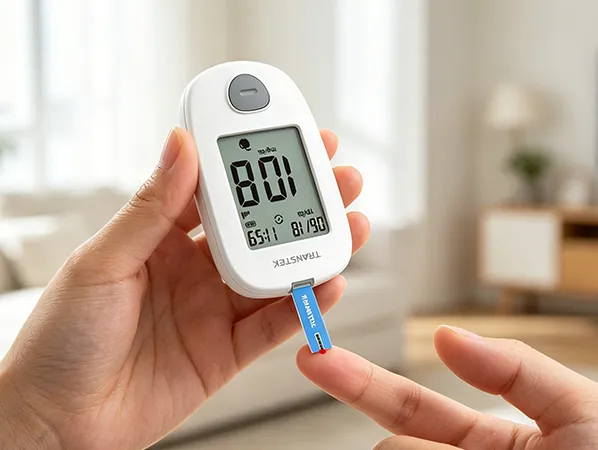
Remote Patient Monitoring (RPM) continues to expand at record pace as health systems adopt home-based care, hospital-at-home pathways, and chronic disease management programs. Yet despite this widespread adoption, one barrier quietly hinders program success more than any other: the difficulty of getting devices activated, connected, and used properly by patients. From Bluetooth pairing issues to confusing app downloads, traditional RPM onboarding introduces friction that leads to low activation rates, poor adherence, and significant operational burden on clinical teams.
Zero-touch deployment solves this problem. By eliminating the steps that patients usually struggle with, zero-touch RPM devices activate instantly, transmit data automatically, and require little to no setup from the patient or provider. This model reshapes the economics of RPM, allows clinicians to scale monitoring programs confidently, and ensures that more patients generate consistent, billable, clinically meaningful data.
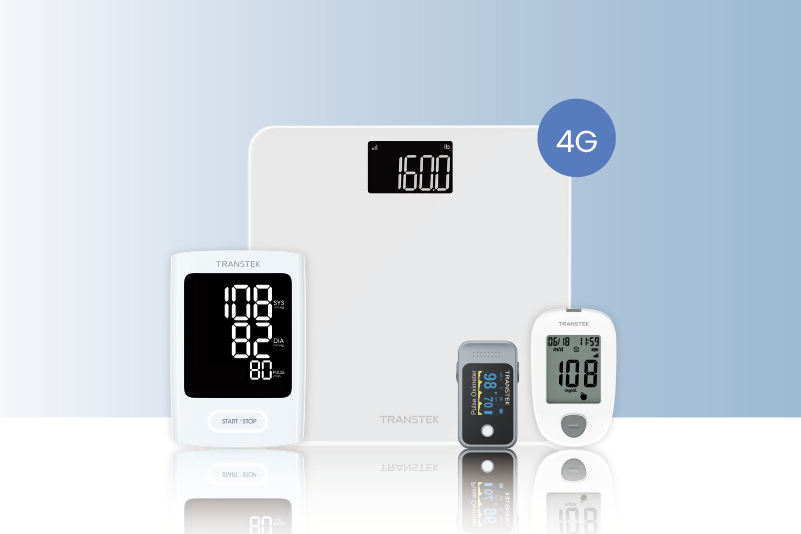
RPM companies like Transtek, whose products include blood pressure monitors, weight scales, glucometers, pulse oximeters, and the AnyHub cellular gateway, are helping healthcare providers build much more efficient RPM patient monitoring workflows.
To understand how zero-touch deployment transforms RPM, it is necessary to examine the issues embedded in the traditional setup experience. Most RPM failures occur before the first reading is ever transmitted because onboarding requires too many steps, implicit assumptions, or technical skills.
1. Bluetooth pairing and app dependency
Bluetooth-enabled devices, such as RPM blood pressure monitor, pulse oximeter, and weight scale, typically require patients to download an app, create an account, pair the device, grant multiple permissions, and keep the app running in the background. For many older adults or individuals managing chronic conditions, this sequence is complex and frustrating. Even a small misstep, such as closing the app or denying a permission, can break data transmission entirely. Devices may appear to work normally on the surface, but the readings never reach the clinical dashboard, creating silent failures that are difficult to detect.
2. Reliance on Wi-Fi or the patient’s home network
Wi-Fi–dependent devices rely on the quality and consistency of the patient’s home network. Weak signals, router resets, forgotten passwords, guest network restrictions, and temporary internet outages all interrupt data flow. These issues are largely outside the patient’s control and often occur without warning. As a result, providers see irregular or missing data, leading to additional calls, troubleshooting sessions, and reduced reliability of the patient’s monitoring history.
3. Smartphone limitations
Some patients do not own smartphones at all, while others use outdated operating systems, lack storage for new apps, or turn off background permissions required for data syncing. Notifications may be disabled, or the necessary app may be accidentally closed. Because traditional RPM devices depend heavily on the patient’s personal smartphone and technical proficiency, any limitation on the patient side quickly becomes a barrier to care.
4. High staff workload for onboarding
The combined effect of these challenges is a significant increase in workload for care teams. Nurses and support staff must spend hours calling patients, walking them through device setup, troubleshooting connectivity issues, or replacing devices that were never actually defective. Each interaction consumes valuable time that could otherwise be spent on clinical follow-up or patient coaching. As the number of patients grows, these inefficiencies become even more visible, raising operational costs and ultimately limiting the scalability of RPM programs.
When activation friction is high, patients take fewer readings, clinicians receive incomplete data, and providers may fail to meet billing thresholds, such as the 16-day device requirement under CMS RPM rules. For programs targeting scale, these hidden barriers may compound, leading to substantial financial loss.
Zero-touch deployment describes RPM devices and systems designed to operate automatically. This approach brings RPM closer to a true home medical service: patients simply take readings, and clinicians receive actionable data without setup failures, technical confusion, or connectivity breakdowns.
Core Characteristics of Zero-touch Deployment:
Cellular-first connectivity: The device connects directly to the network via LTE/4G without patient involvement.
Pre-provisioned SIM cards: All connectivity is enabled before shipment, nothing the user must activate.
Automatic device-to-cloud transmission: Data uploads the moment a reading is taken.
No smartphone dependency: Patients do not need to own a phone or install apps.
Plug-and-play functionality: Devices power on and start working instantly.
Remote management capabilities: Providers can view device status, troubleshoot remotely, and manage fleets through a cloud dashboard.
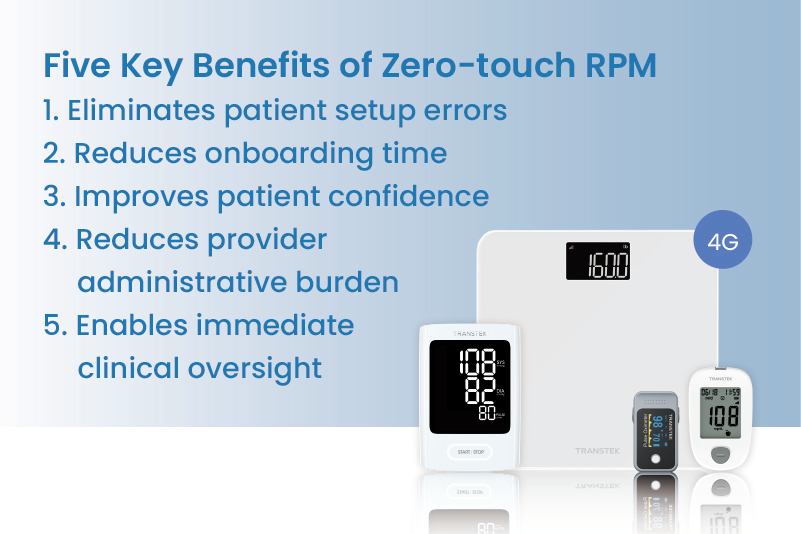
Zero-touch deployment eliminates the setup mistakes that patients commonly encounter with traditional RPM devices. Without the need for pairing, passwords, account creation, app permissions, or technical troubleshooting, patients avoid the confusion that often leads to silent data failures. They simply open the box, turn on the device, and take a reading. Everything else, from connectivity to data transmission, happens automatically in the background, ensuring a smooth start for every user regardless of technical ability.
Traditional RPM workflows often require a long-time phone call or in-person session to walk patients through setup. With zero-touch deployment, devices arrive fully prepared and activated, allowing providers to skip activation calls entirely. Enrollment that once took 30 minutes now takes less than two, making the process nearly instantaneous. This efficiency is particularly beneficial for high-volume RPM programs where staff time is stretched across hundreds or thousands of patients.
Many individuals, especially older adults, those living with chronic illnesses, or patients with limited digital literacy, become anxious when they fear they may have set up something incorrectly. Because zero-touch devices always function immediately and predictably, patients feel reassured and engaged rather than intimidated. This confidence directly supports consistent use, better adherence, and a more positive overall monitoring experience.
For healthcare organizations, the reduction in administrative burden is equally significant. Care teams no longer have to spend hours fixing pairing problems, resolving missing data issues, or replacing devices that malfunction only because they were configured incorrectly. Instead, nurses and medical assistants can shift their attention toward clinical outreach, patient coaching, and intervention, activities that directly improve patient outcomes and enhance the value of RPM programs. Reduced troubleshooting also lowers operational costs and facilitates smoother program scaling.
Because devices transmit data automatically from the moment they are powered on, clinicians gain real-time visibility into patient trends on day one. This early insight allows providers to identify risk sooner, initiate interventions faster, and deliver more proactive care. Continuous and reliable data flow also helps healthcare organizations meet billing requirements for RPM, ensuring the program remains both clinically effective and financially sustainable.
Activation rate is one of the strongest predictors of RPM success. A device that is not activated or activated incorrectly fails to transmit data, undermining clinical oversight and reimbursement. Zero-touch deployment significantly boosts activation rates. Eliminating activation friction leads to higher patient compliance with prescribed monitoring schedules.
Continuous data transmission improves blood pressure trend visibility, glucose monitoring compliance, weight monitoring for CHF patients, SpO₂ monitoring for respiratory patients.
CMS requires 16 days of transmitted data within a 30-day cycle for RPM device reimbursement (CPT code 99454). Zero-touch deployment transforms every KPIs tied to billing, including adherence, day-count thresholds, and program scalability. Zero-touch devices reduce the risk of falling short due to:
Missed pairings
Connectivity dropouts
App crashes
Wi-Fi issues
More data means:
More billable months
More consistent clinical review
Fewer costly troubleshooting interventions
A zero-touch RPM model helps reduce the total cost of ownership even if cellular-enabled hardware carries a slightly higher upfront price. Because devices work out of the box without pairing, apps, or complex troubleshooting, programs spend far less on support staff time, onboarding labor, and help-desk intervention. Providers also avoid the expense of replacing devices that were never truly defective but failed due to user setup errors. Most importantly, the consistency of data transmission prevents billing losses associated with incomplete monitoring periods, ultimately making cellular zero-touch RPM solutions more cost-effective over time.
The reliability of zero-touch connectivity also leads to more predictable monthly reimbursement. When data transmits automatically and consistently, providers experience far fewer gaps that would otherwise result in unbillable patient-months. This stability is especially valuable for organizations managing large RPM populations, where fluctuations in adherence directly affect revenue. With cellular devices providing dependable daily readings, programs can count on a smoother, more predictable reimbursement cycle.
Centralized fleet management further enhances operational efficiency. Zero-touch devices integrated with cloud platforms give providers real-time visibility into device health, connectivity status, and last-transmission timestamps. Teams can track inventory, manage device allocation, and even push firmware updates remotely, eliminating the need for physical interaction with the equipment. Within this ecosystem, tools like Transtek’s cloud portal and AnyHub cellular gateway make it considerably easier to oversee large-scale deployments, ensuring that hundreds or thousands of devices remain functional and connected.
Once an RPM program is built on reliable zero-touch infrastructure, scaling across multiple clinical conditions becomes more straightforward. Providers can confidently extend monitoring to patients with hypertension, diabetes, COPD, congestive heart failure, renal disease, and post-operative needs. Because the system is already optimized for low-friction onboarding and stable data continuity, organizations can scale from small pilot groups to full enterprise-level programs. Zero-touch deployment removes the technical barriers that traditionally limit growth, allowing healthcare systems to broaden their RPM impact with far greater speed and efficiency.
Zero-touch deployment refers to RPM devices that require no setup—no apps, Bluetooth, Wi-Fi, or smartphone steps. Devices arrive fully configured and transmit data immediately.
No. Cellular-first RPM devices transmit data directly to the cloud without any patient intervention.
Elderly patients often struggle with pairing or app setup. Zero-touch devices remove these barriers entirely.
RPM cellular blood pressure monitors, weight scales, glucometers, pulse oximeters, and gateways like Transtek AnyHub all support this model.
Yes. Zero-touch deployment improves activation and adherence, helping providers meet the 16-day device data requirement for RPM billing (CPT 99454).
+86-0760-88282982