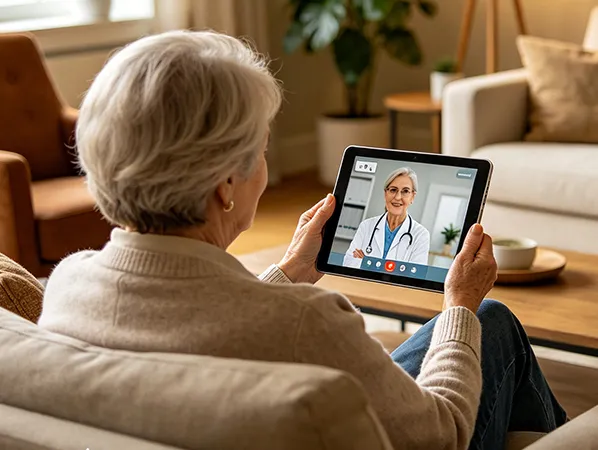
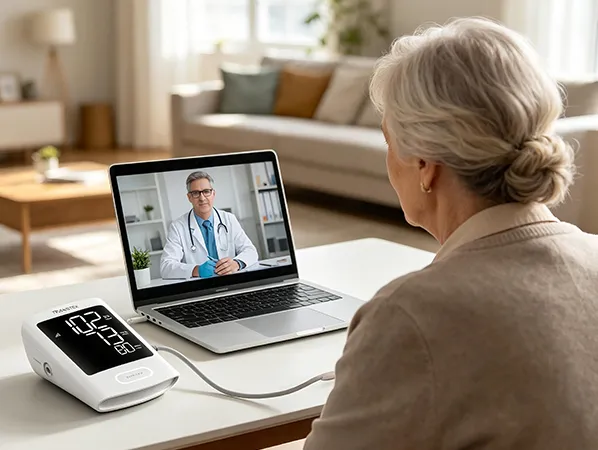
Encompassing telemedicine, remote monitoring, virtual behavioral health, and health apps, telehealth has revolutionized healthcare by increasing access, enhancing quality, and reshaping patient-provider relationships. Many of these shifts were fast-tracked and continue to evolve.
One of the most significant benefits of telehealth systems is improved care access. The Journal of Medical Internet Research surveyed Medicaid directors, who reported that continued telehealth flexibilities improved access, outcomes, and health equity, especially for low-income and rural communities. That study highlighted strong support for maintaining video + audio telehealth services post-pandemic, with caution around audio-only formats for exams requiring physical interaction.
A lasting legacy of telehealth technology is the hybrid care model, blending virtual and in-person visits based on patient need. JAMA commentary emphasizes telehealth's convenience for mental health and medication management, while noting that in-person visits still play a key role in preventive services and physical exams. Providers are also incorporating patient-led virtual exam maneuvers—like self-palpation or movement tests—to augment remote diagnoses.
Telehealth helps reduce unnecessary ED visits and hospital readmissions. During the pandemic, the rapid deployment of hospital telehealth relieved pressure on overburdened systems, helped manage nonemergent cases remotely, and preserved hospital capacity. Financially, it has cut costs for providers by increasing operational efficiency and saved patients time, travel, and related expenses.
Telehealth has proven especially valuable in managing chronic conditions. Remote patient monitoring (RPM) allows early detection of complications like uncontrolled hypertension or elevated glucose, prompting timely adjustments. Behavioral health services have also drawn broad support for audio-only and video telehealth, particularly for therapy. The JMIR study noted mental health services had strong support for continued reimbursement post-PHE.
Transtek is a leading RPM device provider who has extensive experience in the RPM and telehealth markets. Our telehealth and home monitoring devices including RPM blood pressure monitor, blood glucose monitor, weight scale, pulse oximeter and AnyHub.

Ongoing research confirms that telehealth can match in-person care for a variety of conditions, especially mental health and chronic disease management. A 2021 systematic review concluded that telehealth is clinically effective across diverse patient populations. Nonetheless, concerns remain about overtesting, missed preventive care, and reinforcing disparities
Telehealth redirects care into the patient’s environment, providing deep insights into their living conditions, social determinants, and daily routines. The telehealth monitoring at home can improve shared decision-making, enhance adherence, and build stronger therapeutic relationships. The personalization enabled by remote monitoring and health apps supports continuous and tailored care.

As telehealth matures, patient safety, data privacy, and regulatory frameworks have taken center stage. The Joint Commission emphasized the importance of embedding safety and quality into system design and provider training. Strategies include secure platforms, staff education, and proactive digital safety monitoring.
Wearables that continuously monitor vitals and transmit alerts
Home monitoring telehealth kits and self-assessment tools to supplement virtual exams
AI-powered triage bots that route patients appropriately
Integrated health apps feeding data directly into EHRs
These innovations enable more personalized care and contribute to proactive health management.
Telehealth is no longer just a stopgap—it’s a core component of modern healthcare. Its benefits are clear:
Improved access and equity
Improved quality and patient satisfaction
Reduced cost and system strain
Greater engagement and personalization
To truly integrate telehealth long-term, we must:
Maintain reimbursement models for video + audio telehealth remote monitoring beyond PHE.
Invest in equitable broadband and device availability to close access gaps.
Incorporate patient-guided virtual exams to preserve diagnostic quality.
Build robust safety, privacy, and operational guidelines.
Support research to identify best practices, ensuring care delivery matches or exceeds in-person standards.
Telehealth’s continued transformation offers profound potential—for patients, providers, and the healthcare ecosystem. With thoughtful implementation and policy support, it can reshape the future of medicine for the better.

It refers to the use of Application Programming Interfaces (APIs) to enable and enhance telehealth services by allowing different software systems to communicate, exchange data, and function together in a seamless and secure way. API telehealth is to schedule virtual visits, share patient data in real-time, authenticate patients and providers securely and enable video conferencing and chat integrations.
Essentially, APIs make telehealth platforms more powerful, connected, and customizable by linking them to the broader digital health ecosystem.
Blood pressure monitors
Glucometers
Pulse oximeters
Digital thermometers
Smart telehealth scales
Wearable ECG monitors
Telemedicine specifically refers to remote clinical services, like diagnosing and treating illness, whereas telehealth is a broader term that includes non-clinical services such as health education, remote monitoring, and administrative meetings.
No. Mental and behavioral health services are a major part of telehealth, including therapy, psychiatric evaluations, and medication management. Many patients prefer the privacy and convenience of virtual mental health care.
Not always. While it works well for many non-emergency situations, some conditions require in-person exams, lab work, imaging, or urgent procedures. Telehealth providers will refer you to in-person care when needed.
RPM is a type of telehealth where patients use medical devices at home to send real-time health data, like blood pressure, glucose, or oxygen levels to providers for ongoing management."
+86-0760-88282982