In remote patient monitoring (RPM), effective care depends not only on collecting patient readings, but on ensuring those readings are complete, timely, and clinically meaningful. In diabetes management, where treatment decisions rely heavily on glucose patterns, even small gaps in readings can limit clinical visibility and delay intervention.
Bluetooth-enabled glucose meters provide a more efficient approach by simplifying how readings are captured and transmitted. By reducing manual steps and improving consistency, they support a more structured and reliable workflow for healthcare providers managing patients remotely.
Despite the adoption of digital tools, many RPM programs still face challenges with incomplete or inconsistent patient readings. Traditional blood glucose monitoring often involves:
Manual logging by patients
Delayed sharing during in-person visits
Missed measurements due to inconvenience or forgetfulness
These gaps reduce clinicians’ ability to fully understand patient trends. Without consistent readings over time, it becomes difficult to identify variability, detect early signs of instability, or adjust treatment plans with confidence. Even a small number of missing readings can obscure clinically relevant patterns.
Bluetooth glucose meters help address this issue by enabling automatic transmission of readings after each test, reducing reliance on manual reporting and improving overall consistency.
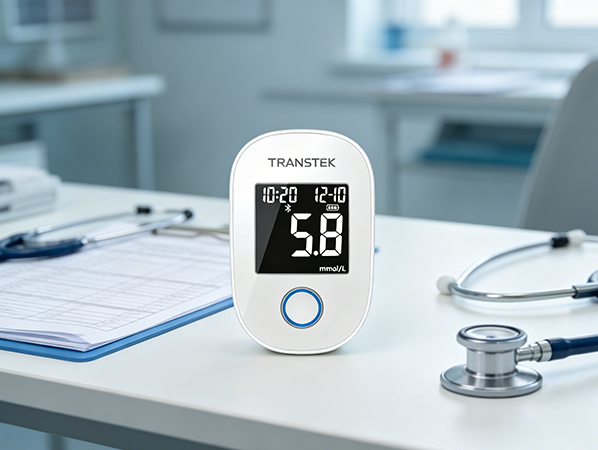
In many RPM programs, a significant portion of clinical and administrative effort is spent reconciling patient-reported readings—verifying logs, correcting inconsistencies, and entering information into clinical systems. This process not only consumes time but also introduces opportunities for error.
Bluetooth connectivity streamlines this workflow. Once a measurement is taken, the reading is automatically transmitted to connected applications or RPM platforms, removing the need for manual entry and post-visit reconciliation. As a result, healthcare providers can spend less time managing information and more time interpreting trends and making decisions.
RPM programs are not one-size-fits-all. Some rely on patient-facing mobile applications to encourage engagement, while others prioritize simplified deployment through hub-based models that reduce technical requirements.
The TeleRPM BGM (Bluetooth®) is designed to support both approaches:
App-based connectivity for patients who prefer direct interaction
Hub-based integration for environments where smartphone use is limited
This flexibility is particularly important when scaling programs across diverse populations. While some patients are comfortable using mobile applications, others benefit from a more passive experience with minimal setup. Supporting both models helps ensure consistency in how readings are captured and transmitted, regardless of patient capability.
When readings are captured consistently over time, healthcare providers gain a clearer view of patient trends and variability. This improved visibility supports a more proactive approach to diabetes management.
With access to structured, time-stamped readings, clinicians can:
Identify patterns such as post-meal spikes or nocturnal hypoglycemia
Adjust medications with greater precision
Provide more targeted lifestyle recommendations
For example, recurring elevated fasting readings may indicate the need for dietary changes or treatment adjustments. Earlier recognition of these patterns enables timely intervention and supports better long-term outcomes.
Consistent transmission alone is not sufficient—clinical decisions depend on the accuracy of each individual reading. The TeleRPM BGM (Bluetooth®) is designed to deliver reliable performance across a wide range of patient conditions.
Key features include:
Clinically validated accuracy standards
8-electrode test strip technology for stable signal detection
Wide hematocrit (HCT) range compatibility (20–70%)
These capabilities help reduce variability and support more confident interpretation of patient readings in everyday clinical practice.
Beyond clinical use, RPM programs must also address operational challenges, including onboarding, training, and ongoing device management. Devices that are difficult to use or maintain can increase support burden and slow program expansion.
The TeleRPM BGM (Bluetooth®) is designed with simplicity in mind. Its one-click operation minimizes the need for patient training, while fast testing and a rechargeable battery design reduce ongoing maintenance requirements. Together, these features support more efficient onboarding, lower support demands, and improved adherence to monitoring routines.
As healthcare providers continue to move toward value-based care, the ability to monitor patients effectively and intervene early is becoming increasingly important. Consistent access to patient readings enables better prioritization, more timely intervention, and improved coordination across care teams.
Bluetooth glucose meters support this shift by making patient monitoring more reliable and less dependent on manual processes. In doing so, they help healthcare providers deliver care that is not only more efficient, but also more responsive to patient needs.
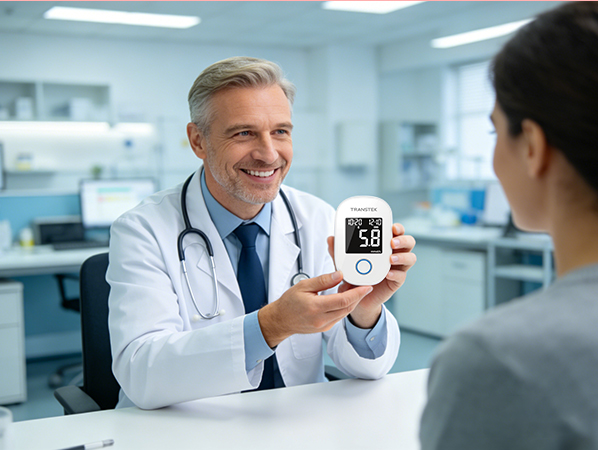
The TeleRPM BGM blood glucose monitoring enhances traditional glucose monitoring by improving consistency in how readings are captured and shared. Through automated transmission, flexible integration, and reliable measurement performance, it supports more efficient clinical workflows in RPM programs.
For healthcare providers, this means reduced administrative burden and more informed decision-making. For RPM programs, it enables scalable deployment while maintaining care quality.
As remote care continues to expand, solutions that reduce complexity while improving reliability will play a central role in advancing diabetes management.
+86-0760-88282982