In today's digital healthcare environment, diabetes management extends beyond occasional clinic visits and focuses increasingly on daily monitoring, patient participation, and continuous communication between patients and healthcare providers. For individuals managing diabetes, understanding how daily activities such as diet, physical activity, medication, and lifestyle choices affect glucose levels is an important part of long-term care.
Bluetooth® Blood Glucose Monitors are supporting this shift by connecting glucose testing with digital healthcare workflows. Through wireless synchronization with smartphone applications and connected healthcare systems, these devices help simplify glucose tracking, improve patient engagement, and support a more convenient diabetes management experience. Instead of relying only on individual readings or manual records, Bluetooth® technology helps patients and healthcare providers better understand glucose trends over time.
Successful diabetes management depends on more than accurate glucose measurements. Patients who actively participate in monitoring their condition are often better able to understand how everyday factors, including meals, physical activity, medication, stress, and sleep, influence their glucose levels.
Traditional diabetes care often relies on periodic clinic visits and handwritten glucose records. While these methods can provide useful information, they may not fully reflect daily glucose patterns or encourage consistent patient participation between appointments.
As healthcare continues moving toward value-based and patient-centered care, helping individuals become active participants in their own health management has become an important goal. Digital monitoring technologies support this approach by making glucose readings easier to record, review, and understand.
For healthcare providers, higher patient engagement can also support more meaningful follow-up discussions. When patients can review their readings, identify trends, and understand how daily choices influence glucose control, they are more likely to maintain regular testing habits and communicate more effectively with care teams.
Although blood glucose monitoring remains an essential part of diabetes management, traditional monitoring methods may create challenges when patients manage their condition over extended periods.
Many individuals still record glucose readings in notebooks or manually enter results into spreadsheets or mobile notes. These approaches may provide basic records, but incomplete entries and inconsistent tracking can make it more difficult to recognize meaningful glucose patterns over time.
Common challenges include:
Manual recording errors
Incomplete glucose records
Difficulty identifying long-term glucose trends
Limited information available during clinical consultations
Reduced engagement caused by repetitive recordkeeping
Without organized glucose records, healthcare providers may only see individual measurements during appointments rather than a broader view of glucose management patterns. Patients may also find it difficult to understand how daily habits affect glucose control.
Connected monitoring technologies help address these challenges by simplifying glucose record management and making historical readings easier to review.
Bluetooth® Blood Glucose Monitors combine traditional glucose testing with wireless connectivity, allowing patients to connect their measurements with compatible digital tools.
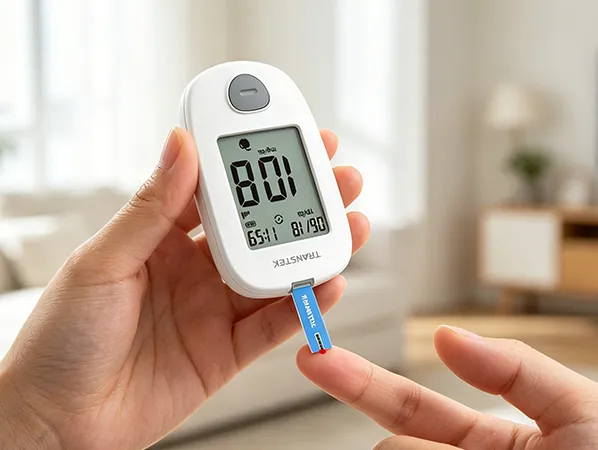
Instead of manually recording every measurement, users can synchronize glucose readings with a compatible smartphone application after testing. Historical records, trend charts, and measurement summaries can then be reviewed through the connected application or Device Management Dashboard, helping patients better understand their glucose management patterns.
A typical Bluetooth® monitoring workflow includes:
Measure blood glucose using the Bluetooth® glucose meter.
Synchronize the glucose reading with a compatible mobile application or connected system.
Review historical measurements and glucose trends.
Monitor changes related to daily activities and lifestyle factors.
Share glucose records with healthcare providers when appropriate.
By reducing repetitive manual recordkeeping, Bluetooth® monitoring allows patients to spend less time organizing records and more time focusing on effective diabetes self-management. For healthcare organizations, connected monitoring supports more efficient review of patient glucose trends while improving engagement in digital diabetes programs.
Individual glucose readings provide important clinical information, but effective diabetes management depends on understanding patterns rather than isolated measurements.
Bluetooth® Blood Glucose Monitor can organize measurements into historical records and trend reports, helping patients identify changes that may otherwise be difficult to recognize. Instead of viewing glucose levels as separate readings, patients can better understand how meals, activity levels, medication schedules, and daily routines influence glucose control.
Connected applications can help patients observe relationships between lifestyle choices and glucose trends. This visibility encourages stronger engagement because individuals can see how consistent daily behaviors contribute to better diabetes management.
For healthcare providers, organized glucose trend reports can support more productive consultations by providing a clearer picture of a patient's glucose management patterns instead of relying only on patient memory or handwritten records.
Effective diabetes management relies on ongoing communication between patients and healthcare professionals. However, traditional glucose records may be incomplete or difficult to interpret, making it challenging for clinicians to evaluate overall glucose management during routine appointments.
Bluetooth® Blood Glucose Monitors support this process by organizing glucose readings into digital records that are easier to review. Instead of relying only on handwritten notes or patient recollection, healthcare providers can evaluate historical glucose trends and discuss treatment decisions based on more complete glucose information.
This connected approach supports better understanding of treatment effectiveness, more productive follow-up visits, and stronger collaboration between patients and providers. When patients can clearly visualize their glucose trends, they become more engaged in discussions about their diabetes management plans.
As healthcare continues to embrace digital transformation, blood glucose monitoring devices are becoming part of broader connected healthcare workflows instead of functioning as standalone products.
Bluetooth® connectivity enables glucose meters to communicate with smartphone applications, Device Management Dashboards, chronic disease management solutions, and other digital healthcare systems. This integration helps glucose readings move more efficiently through connected care workflows while reducing the need for manual recordkeeping.
Connected digital healthcare solutions can support diabetes management programs, mobile health applications, primary care follow-up, community healthcare services, telehealth programs, and chronic disease management initiatives. For healthcare organizations, connected monitoring helps improve workflow efficiency by providing more organized glucose records and supporting more informed patient follow-up. For patients, it creates a more convenient monitoring experience that encourages regular testing and active participation in diabetes management.
Bluetooth® Blood Glucose Monitors are especially suitable for healthcare programs that emphasize patient self-management, digital engagement, and connected care experiences. They are ideal for individuals who regularly use smartphones and are comfortable interacting with mobile health applications as part of their daily routine.
Healthcare organizations commonly deploy Bluetooth® monitoring devices in:
Digital diabetes management programs
Primary care services
Community health initiatives
Telehealth follow-up programs
Employee wellness programs
Preventive healthcare services
When selecting a Bluetooth® blood glucose monitoring solution, healthcare providers should evaluate measurement accuracy, ease of operation, reliable connectivity, compatibility with existing digital health systems, secure synchronization of glucose readings, and scalability for future healthcare programs.
The right Bluetooth® solution should not only provide accurate measurements but also create a simple and practical monitoring experience for patients while supporting efficient workflows for healthcare organizations.
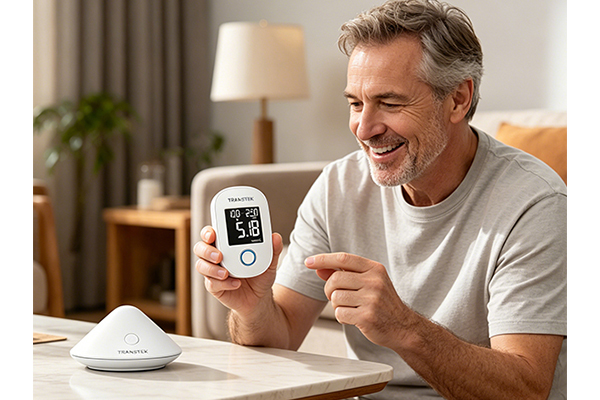
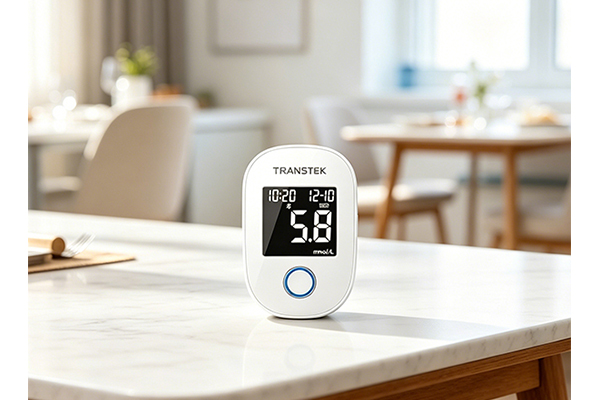
Transtek's TeleRPM BGM (Bluetooth®) is designed for digital diabetes care programs that require reliable wireless connectivity, simple operation, and convenient glucose tracking. Through Bluetooth® connectivity, the device connects with AnyHub and compatible applications, enabling glucose readings to be synchronized with connected healthcare workflows.
For digital diabetes programs, Transtek's Bluetooth® Blood Glucose Meter supports app-based glucose tracking and helps users review their measurements and trends more conveniently. The solution can also integrate with Device Management Dashboards, allowing healthcare providers to review glucose trends and support remote diabetes management programs.
Product features including 8-electrode test strips, HCT correction across a 20–70% hematocrit range, clinically validated accuracy, one-click operation, a rechargeable battery, and 5-second measurement results support a more convenient and reliable daily testing experience.
For patients, Bluetooth® connectivity reduces the burden of manual recordkeeping and helps make glucose monitoring part of a simpler digital healthcare routine. For healthcare organizations, connected Bluetooth® monitoring solutions support scalable diabetes management programs by improving patient participation and simplifying glucose trend review.
Digital healthcare is reshaping the way diabetes is managed, placing greater emphasis on patient engagement, connected monitoring, and personalized care experiences.
Bluetooth® Blood Glucose Monitors support this evolution by making glucose readings easier to record, review, and understand. By connecting glucose testing with smartphone applications and Device Management Dashboards, these devices help patients take a more active role in daily diabetes management while supporting more effective communication with healthcare providers.
Designed for modern digital healthcare environments, Transtek's Bluetooth® Blood Glucose Monitors combine wireless connectivity, practical user experience, and connected workflow integration to help healthcare organizations build more efficient diabetes management programs.
By supporting better glucose trend visibility, easier self-management, and stronger collaboration between patients and providers, Bluetooth® monitoring solutions contribute to more connected and patient-centered diabetes care.
+86-0760-88282982