The transition from hospital to home is one of the most critical stages in COPD recovery. Although many patients are clinically stable when discharged, their respiratory function may remain vulnerable during the weeks that follow. Oxygen saturation levels can fluctuate as patients resume daily activities, making ongoing monitoring an important part of post-discharge care.
To improve continuity of care outside clinical settings, healthcare providers are increasingly incorporating Remote Patient Monitoring (RPM) into COPD management programs. Among the available RPM devices, cellular-enabled pulse oximeters offer a practical solution by allowing oxygen saturation measurements to be shared automatically with care teams, helping support timely clinical follow-up without requiring frequent hospital visits.
Chronic Obstructive Pulmonary Disease (COPD) is a progressive respiratory condition that significantly affects lung function and oxygen exchange. According to the World Health Organization (WHO), COPD is one of the leading causes of death globally and requires continuous long-term management beyond hospital treatment.
After hospital discharge, patients enter a high-risk recovery phase where oxygen levels can fluctuate unpredictably. Clinical research shows that early detection of oxygen desaturation during this period is critical to preventing respiratory complications and hospital readmissions.
Because of this, continuous monitoring using an 4G pulse oximeter has become an important part of modern COPD care pathways.
Conventional pulse oximeters are widely used in home care, but many still depend on patients manually recording and reporting their readings.
This approach may create several challenges:
Missed intermittent hypoxemia events
Incomplete or inaccurate measurement records
Delayed communication with healthcare providers
Reduced adherence among elderly patients
These limitations can make it more difficult for care teams to maintain consistent visibility into a patient's respiratory status, highlighting the value of more automated monitoring solutions.
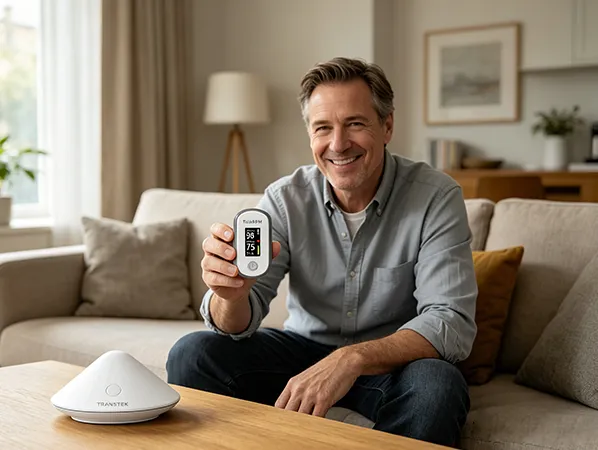
A cellular RPM pulse oximeter automatically measures oxygen saturation (SpO₂) and pulse rate while transmitting measurements through a built-in 4G cellular connection. Unlike traditional home monitoring devices, it eliminates the need for smartphone pairing, mobile applications, or manual reporting, making routine monitoring simpler for both patients and caregivers.
For COPD patients recovering at home, this streamlined workflow supports more consistent monitoring throughout the recovery period. Instead of relying only on occasional clinic visits, healthcare providers can review measurement trends over time to better understand changes in a patient's respiratory condition.
According to the National Institutes of Health (NIH), pulse oximetry remains a standard method for assessing oxygen saturation in patients with respiratory diseases. When incorporated into RPM programs, it supports ongoing observation of SpO₂ trends outside traditional clinical environments.
One of the biggest challenges in remote monitoring is ensuring that patients can use monitoring devices consistently without technical barriers.
Many COPD patients are older adults who may find smartphone setup, Bluetooth pairing, or mobile applications difficult to manage. When monitoring depends on multiple user steps, routine measurement collection may become inconsistent.
The cellular pulse oximeter addresses this challenge by using built-in 4G connectivity to automatically transmit measurements after each reading. Patients simply complete the measurement, while healthcare providers receive timely updates without requiring additional actions from the user.
This simplified experience helps reduce technology-related barriers for both patients and caregivers while supporting more reliable long-term monitoring programs.
Cellular connectivity also makes large-scale RPM deployment easier for healthcare providers by minimizing setup requirements and reducing ongoing technical support.
Consistent access to oxygen saturation measurements allows healthcare providers to observe changes in a patient's respiratory condition between scheduled appointments.
Rather than relying solely on isolated clinic readings, clinicians can review SpO₂ measurement trends over time. A gradual decline in oxygen saturation, for example, may indicate that a patient requires further clinical evaluation before more noticeable symptoms develop.
Depending on the RPM platform being used, measurements may also be presented through configurable notifications or prioritized review workflows, helping care teams identify patients who may benefit from earlier follow-up.
By providing greater visibility into respiratory measurements outside traditional care settings, cellular RPM pulse oximeters support more informed clinical decision-making throughout the recovery process.
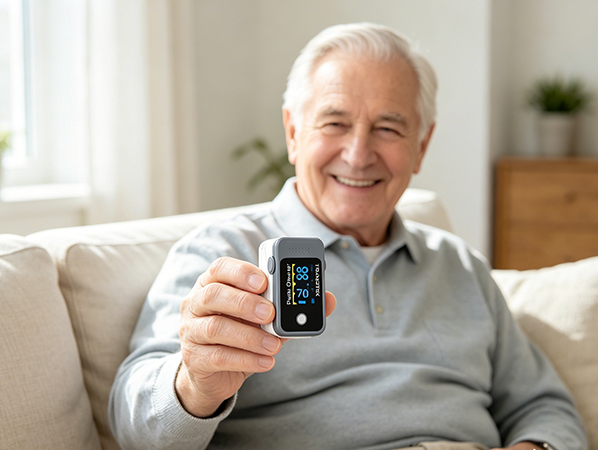
The first 30 days following hospital discharge are widely recognized as a critical period in COPD recovery. During this time, patients may require closer observation as medications, oxygen therapy, and daily routines are adjusted.
A cellular RPM pulse oximeter helps healthcare providers maintain ongoing visibility into a patient's oxygen saturation during this transition. Measurements are automatically transmitted to a Device Management Dashboard, allowing clinicians to review patient status between scheduled visits without requiring additional effort from the patient.
This continuous monitoring approach supports coordinated post-discharge care by helping healthcare teams follow recovery progress, reinforce treatment plans, and determine when additional clinical assessment may be appropriate.
As healthcare providers continue expanding Remote Patient Monitoring programs, scalability has become an important consideration for chronic disease management.
Cellular-connected monitoring devices simplify deployment by eliminating the need for smartphones, Bluetooth pairing, or Wi-Fi configuration. This reduces setup complexity for patients while allowing healthcare providers to implement RPM programs across larger patient populations more efficiently.
For COPD management, cellular RPM pulse oximeters provide a practical foundation for long-term respiratory monitoring in a variety of care settings, including post-discharge care, hospital-at-home programs, and chronic disease management initiatives.
Combined with Device Management Dashboards, cellular monitoring solutions help healthcare providers streamline daily workflows, improve operational efficiency, and maintain consistent oversight of patient measurements across multiple care environments.
As value-based healthcare continues to evolve, cellular RPM technologies support more efficient resource utilization while helping providers extend monitoring beyond traditional clinical settings.
Blood oxygen monitoring plays an important role in supporting COPD management after hospital discharge. Monitoring blood oxygen saturation over time gives healthcare providers greater visibility into a patient's respiratory condition during one of the most vulnerable stages of recovery.
Cellular-enabled RPM pulse oximeters simplify home monitoring by eliminating smartphone dependency and manual reporting. With built-in 4G connectivity, measurements are automatically shared with healthcare providers, helping support timely clinical review while reducing the burden on patients and caregivers.
As healthcare providers continue expanding remote care programs, cellular RPM solutions offer a practical and scalable approach to improving post-discharge monitoring, enhancing care coordination, and supporting long-term COPD management.
+86-0760-88282982