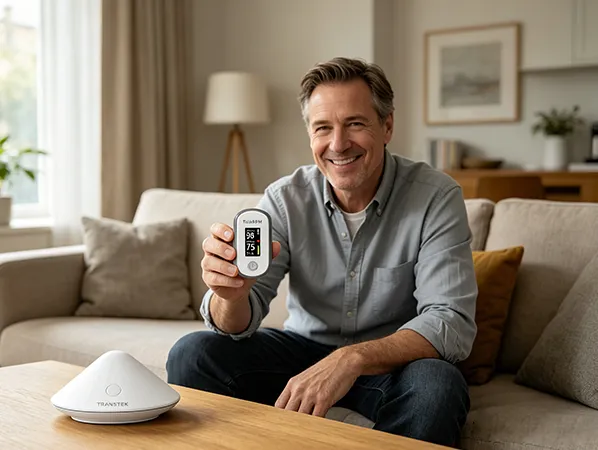
Remote Patient Monitoring (RPM) programs rely on connected devices to help healthcare providers monitor patients outside traditional care settings. Pulse oximeters can support these workflows by measuring oxygen saturation (SpO₂) and pulse rate at home.
In RPM programs, however, measurement capability is only part of the overall device experience. A Bluetooth pulse oximeter also needs to be easy for patients to use, connect reliably with the RPM system, and fit the practical requirements of large-scale deployment.
A well-designed connected pulse oximeter can address these needs through a combination of Bluetooth connectivity, cellular transmission, and simplified patient operation. Features such as app-free use, no smartphone pairing, connection support, battery notifications, and measurement reminders can further support device use after deployment.
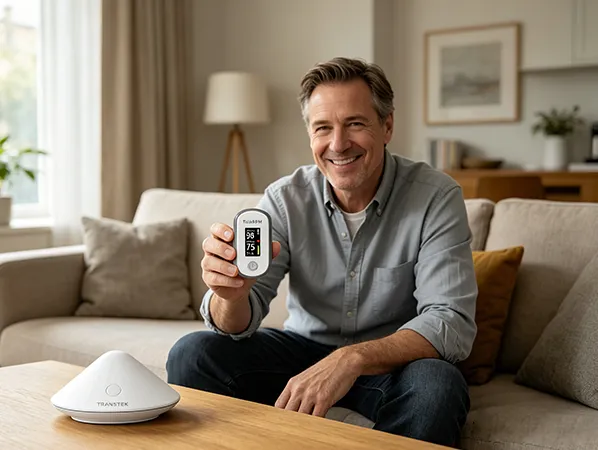
A pulse oximeter designed for RPM needs to address both measurement and everyday use. In addition to SpO₂ and pulse rate performance, several factors can influence how effectively the device fits into a RPM program.
These include:
Reliable Bluetooth connectivity
A practical connection architecture for home use
Simple patient operation
No unnecessary smartphone or app requirements
Battery status support
Measurement activity reminders
Compatibility with the RPM workflow
These capabilities serve different purposes. Measurement performance supports the monitoring process, while connectivity and usability influence how easily the device can be deployed and used at home.
For healthcare providers, this distinction is important. A device that performs well as a standalone pulse oximeter may still require additional considerations when it becomes part of an RPM program serving multiple patients. The overall device experience should therefore be considered alongside measurement capabilities.
One practical challenge with Bluetooth devices is the need to establish a connection between the device and the system receiving the readings. If patients rely on their personal smartphones, they may need to download an app, pair the device, manage Bluetooth settings, or troubleshoot smartphone-related issues.
A cellular hub can simplify this architecture.
With a Bluetooth pulse oximeter connected to a cellular hub, the pulse oximeter communicates with the hub through Bluetooth. The hub then uses cellular connectivity to transmit completed readings through the RPM workflow.
This approach reduces several patient-side requirements:
No app download for daily transmission
No smartphone pairing
No manual upload of readings
No dependence on a patient's personal smartphone for connectivity
For healthcare providers, this can also create a more standardized deployment model. Instead of adapting the device setup to different patient smartphones, the pulse oximeter and hub can function as a dedicated RPM device configuration.
This is particularly useful for RPM programs where patients may have different levels of technical familiarity or may not have a smartphone available for daily monitoring.
The connection between a Bluetooth pulse oximeter and its cellular hub is an important part of the overall workflow. If the connection is unreliable, completed measurements may not move through the intended transmission path as expected.
Home environments can vary, so Bluetooth connectivity should be considered when evaluating a pulse oximeter for RPM. RSSI, or Received Signal Strength Indicator, can provide an indication of Bluetooth signal strength and support connection monitoring.
For an RPM device solution, this can provide additional visibility into the connection between the pulse oximeter and hub. It complements the measurement function by supporting a more reliable connected-device experience.
Transtek Oximeter Bluetooth incorporates Stable Bluetooth Connection as part of its connectivity design, helping support communication between the pulse oximeter and cellular hub.
How to Evaluate a Bluetooth Pulse Oximeter for RPM program
For healthcare providers, evaluating a Bluetooth pulse oximeter goes beyond individual device features. The key is to consider how the device fits into the overall monitoring workflow and whether its design can support consistent use across different patient groups.
Several practical questions can help guide the evaluation:
Can patients use the device with minimal technical steps?
Does the solution reduce reliance on patient-owned smartphones?
Can the device and connectivity setup be standardized across patients?
Can the solution support efficient deployment at scale?
Does the overall design fit the organization's existing RPM workflow?
Looking at these factors together can help healthcare providers evaluate not only measurement capability, but also the usability, connectivity, and scalability of the overall device solution.
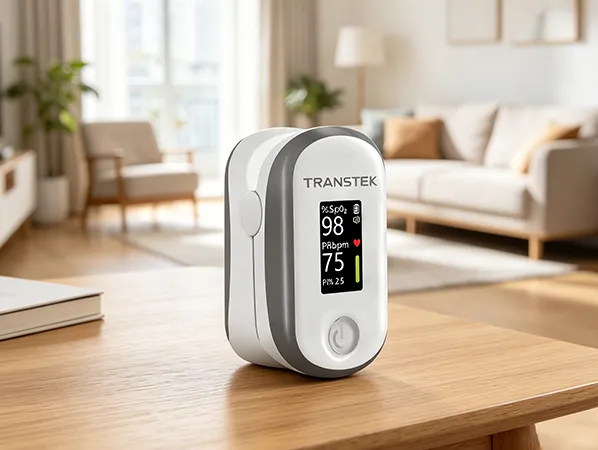
Transtek Bluetooth Pulse Oximeter combines SpO₂ and pulse rate measurement with a Bluetooth-to-cellular anyhub architecture designed for RPM programs.
The pulse oximeter connects with the cellular hub through Bluetooth, while the hub handles cellular transmission within the RPM workflow. Patients do not need to download an app or pair the pulse oximeter with a smartphone for daily transmission.
For healthcare providers and RPM service organizations, this hub-centered approach can reduce reliance on patient-owned smartphones while providing a more standardized setup for home monitoring.
A Bluetooth pulse oximeter for RPM needs to offer more than SpO₂ and pulse rate measurement. Connectivity, patient usability, and practical device support are also important when deploying connected devices in the home.
By combining Bluetooth connectivity with a cellular anyhub, app-free operation, no smartphone pairing, and supporting device-status capabilities, Transtek Bluetooth Pulse Oximeter is designed to fit the practical requirements of RPM programs.
For RPM teams evaluating pulse oximeter solutions, considering the complete device experience can help identify a solution that is easier for patients to use and more practical for healthcare providers to deploy at scale.
+86-0760-88282982