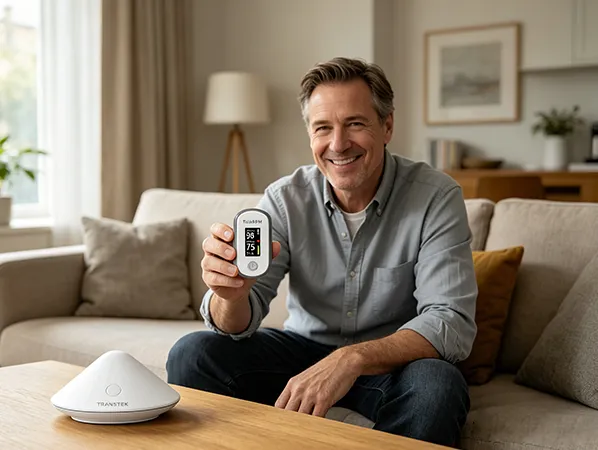
A pulse oximeter used in a clinic can be checked, cleaned, powered, and supported by trained staff. A pulse oximeter used at home is different. The patient may be alone, may not have technical support nearby, and may need to complete measurements as part of a daily or weekly remote monitoring routine. In this setting, low-maintenance design becomes important.
For RPM deployment, a device should not require complicated setup, frequent troubleshooting, or repeated patient-side actions. The easier the device is to operate and maintain, the more likely patients are to complete measurements consistently. This is especially true for remote pulse oximetry monitoring, where the measurement process should be fast, clear, and easy to repeat.
Low-maintenance design is not only about convenience. It can affect program efficiency. If patients frequently need help with batteries, display reading, device operation, or transmission steps, care teams may spend more time on technical support than on data review. A well-designed cellular pulse oximeter should reduce this burden by supporting simple operation from the first measurement onward.

Remote pulse oximetry monitoring can be interrupted by small operational issues. Each issue may seem minor, but together they can reduce adherence and create additional work for care teams.
Common friction points include:
Unclear device operation
Small or difficult-to-read displays
Frequent battery concerns
Uncertainty about whether the measurement is complete
Confusion about whether data has been transmitted
Too many steps before or after measurement
Lack of portability for regular use
Patient hesitation caused by technical complexity
These problems are not always related to the patient's willingness to participate. Often, they reflect device design. If the device requires too many steps, patients may make mistakes. If the display is hard to read, patients may feel uncertain. If power management is inconvenient, measurements may be missed.
A low-maintenance design reduces the chance that these small issues will interrupt the monitoring routine.
One-button operation is valuable because it keeps the measurement process simple. Patients should not need to navigate menus, remember a sequence of commands, or adjust device settings before each reading. In home RPM, the ideal workflow is direct: place the device, start the measurement, read the result, and allow the data pathway to continue.
This type of simplicity is especially important when pulse oximeter measurements are repeated over time. A patient may understand the process during onboarding but forget details later. One-button operation reduces the amount of instruction that needs to be remembered.
It also reduces support burden. When care teams explain the device by phone or during remote onboarding, a simple operation process is easier to communicate. The fewer steps involved, the easier it is to troubleshoot when questions arise.
Transtek TeleRPM Pulse Oximeter is designed with one-button operation, supporting a simpler measurement process for home users. The device is also lightweight, portable with a lanyard, and designed with a 0.96-inch OLED rotate display.
Power management is an important part of low-maintenance design. If patients need to remember to power off the device every time, battery life may be wasted. If the device runs out of power unexpectedly, readings may be missed.
Auto switch-off helps reduce this concern by powering down the device after use. This supports battery conservation and lowers the chance that a patient forgets to turn the device off. For daily or repeated home monitoring, this small design feature can make the device easier to maintain.
Dry batteries can also support practical home use because they are familiar and easy to replace. Patients do not need to manage charging cables or remember charging schedules in the same way they might with rechargeable devices. This can be useful in RPM programs where device simplicity is a priority.
Together, auto switch-off and dry battery design help reduce the maintenance burden after measurement. The patient does not need to manage complex power routines, and care teams may face fewer support issues related to battery use.
A pulse oximeter reading should be easy to see and understand. If the display is too small, unclear, or difficult to orient, patients may question whether they completed the measurement correctly. This can lead to repeated measurements, confusion, or unnecessary support requests.
Display design is especially important because pulse oximeters are often used briefly. Patients place the device on the finger, wait for the reading, and check the numbers. A clear display helps the patient confirm that the reading is complete and understand the result shown on the screen.
A rotate display can improve usability by making the information easier to read from different viewing angles. This is useful when patients use the device independently at home, without someone else reading the screen for them.
In RPM deployment, clear display design supports patient confidence. When patients can see the result easily, they are more likely to trust the measurement process and repeat it as instructed.
Before deploying pulse oximeters across a RPM program, RPM teams should evaluate how the device performs in everyday use, not only its technical specifications.
Key questions include:
Can patients complete the measurement with minimal instruction?
Is the device light and comfortable to handle?
Is the display clear and easy to read?
Does the device reduce unnecessary button steps?
Does auto switch-off help conserve battery life?
Is the device easy to carry and store?
Does data transmission reduce patient-side reporting?
Can support teams explain the workflow quickly?
These questions help predict whether the device will be practical after deployment. A pulse oximeter may be accurate, but if it creates too much operational friction, the RPM program may still face missed readings and support workload.
Low-maintenance design helps make the device easier to deploy, easier to explain, and easier to maintain in real home environments.
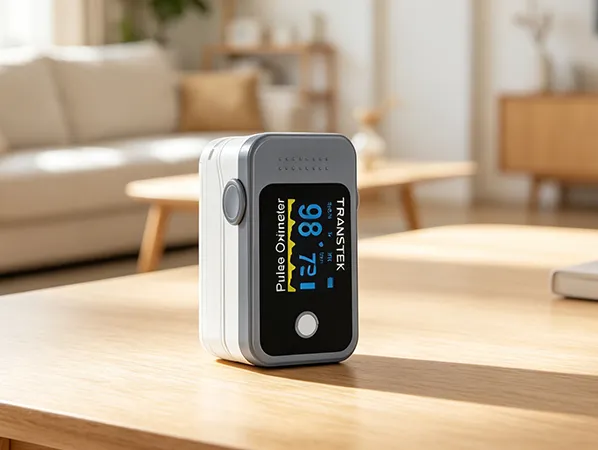
Transtek cellular Pulse Oximeter is designed for cellular RPM workflows. It supports stable and reliable 4G connectivity with intelligent switching between two cellular networks, helping the device maintain connection for remote measurements transmission.
The device also emphasizes low-maintenance usability features, including light weight, portable lanyard design, one-button operation, auto switch-off, and a 0.96-inch OLED rotate display. These features help reduce patient-side complexity during daily use.
For RPM programs, this combination matters. Cellular connectivity helps reduce dependence on smartphones, apps, or home Wi-Fi. One-button operation and auto switch-off simplify the measurement routine. The lightweight design and clear rotating display make the device easier to use at home.
Low-maintenance pulse oximeter design is not only a product detail. It affects whether patients can complete measurements consistently and whether healthcare providers can manage their telehealth programs efficiently. By combining cellular connectivity, simple operation, automatic power management, and home-friendly usability, Transtek Pulse Oximeter supports a practical approach to remote pulse oximetry monitoring deployment.
+86-0760-88282982