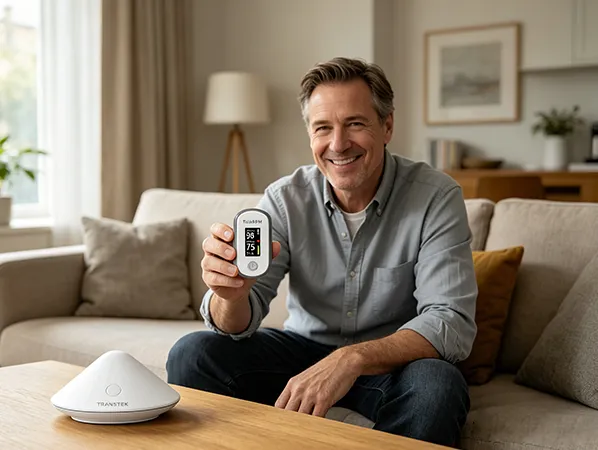
Home respiratory monitoring has become an increasingly important part of Remote Patient Monitoring (RPM) programs, particularly for patients who require routine SpO₂ and pulse rate monitoring after hospital discharge, during chronic respiratory disease management, or as part of long-term home healthcare.
While measuring oxygen saturation is generally straightforward, ensuring that measurements are consistently shared with healthcare providers can be more challenging. Many connected monitoring devices rely on smartphones, mobile applications, Bluetooth pairing, or manual reporting, creating additional steps that may reduce patient adherence.
Cellular pulse oximeters address this challenge by using built-in 4G connectivity to automatically transmit measurements after each reading. By eliminating smartphone dependency, these devices simplify the monitoring experience for patients while supporting more consistent measurement visibility for healthcare providers. For older adults, post-discharge patients, and individuals with limited digital experience, a smartphone-free workflow can make daily respiratory monitoring easier to perform and maintain.
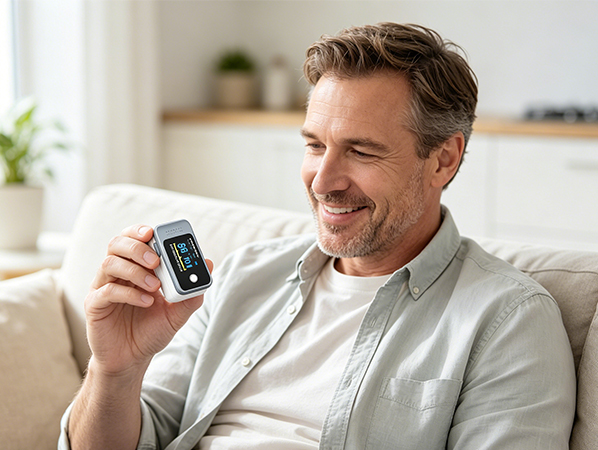
Pulse oximeters have become familiar tools for home respiratory monitoring. Patients simply place a finger into the device to measure oxygen saturation (SpO₂) and pulse rate. However, when a pulse oximeter becomes part of an RPM program, the overall workflow often becomes more complicated.
Some connected monitoring solutions require patients to keep a smartphone nearby, open a mobile application, pair the device through Bluetooth, confirm successful synchronization, or troubleshoot transmission issues. While these tasks may be manageable for experienced smartphone users, they can become obstacles for elderly patients or individuals recovering at home after hospitalization.
Common challenges include:
Forgotten application passwords
Bluetooth pairing failures
Incompatible smartphones
Unstable wireless connections
Uncertainty about whether measurements were successfully transmitted
When these issues occur repeatedly, patients may become less confident in the monitoring process. Healthcare providers and care coordinators may also spend additional time resolving technical issues instead of reviewing patient measurement trends.
For respiratory monitoring, consistency is essential. Missing a single measurement may not significantly affect clinical assessment, but repeated gaps can make it more difficult to understand whether oxygen saturation remains stable, improves, or gradually declines over time.
A cellular pulse oximeter streamlines home monitoring by automatically transmitting measurements through built-in 4G connectivity. Patients are not required to use smartphones, install applications, pair devices through Bluetooth, or manually report readings after each measurement.
A typical cellular RPM workflow includes:
The patient measures SpO₂ and pulse rate at home.
The device automatically transmits the measurement through the cellular network.
Measurements are received and organized within the Device Management Dashboard.
Healthcare providers review measurement trends and determine whether follow-up is appropriate.
This simplified workflow is particularly valuable for patients who are less comfortable using smartphones or digital applications. It also helps healthcare providers standardize RPM deployment because monitoring is no longer dependent on each patient's mobile device, operating system, or level of digital literacy.
For home respiratory monitoring programs, simplicity can directly influence patient adherence. When patients only need to complete a measurement and the device automatically handles transmission, routine monitoring becomes easier to repeat consistently. Over time, consistent measurements provide healthcare providers with greater visibility into respiratory trends than isolated clinic readings alone.
Pulse oximeters measure blood oxygen saturation (SpO₂) and pulse rate. While an individual measurement reflects a patient's condition at a specific moment, measurements collected consistently over time provide a clearer picture of changes in respiratory status.
For example, a patient may demonstrate acceptable oxygen saturation during a clinic visit but experience lower SpO₂ readings during daily activities or overnight recovery. Another patient recovering after hospital discharge may show gradual changes in oxygen saturation over several days. Without consistent home measurements, these changes may be more difficult to recognize until symptoms become more apparent.
Monitoring measurement trends can help healthcare providers better understand:
Whether oxygen saturation remains stable over time
Whether SpO₂ changes after activity or periods of rest
Whether additional clinical follow-up may be appropriate
Whether recovery is progressing as expected after discharge
Whether repeated missed measurements suggest adherence or device-use challenges
Automatic cellular transmission supports this process by improving measurement continuity throughout home monitoring. Instead of spending time collecting information from multiple sources, healthcare providers can focus on reviewing measurement trends and evaluating changes between scheduled appointments. While home monitoring does not replace clinical evaluation, it provides additional visibility that supports informed care decisions.
For many RPM programs, the effectiveness of home monitoring depends not only on measurement accuracy but also on how easily patients can follow the monitoring process every day.
Older adults, post-discharge patients, and individuals with limited digital experience may be able to complete an SpO₂ measurement successfully but still encounter difficulties when smartphones, mobile applications, or Bluetooth pairing are required. In these situations, reducing workflow complexity can be just as important as the measurement itself.
Cellular pulse oximeters help address these challenges by minimizing patient-side technical requirements. Because measurements are transmitted automatically through built-in 4G connectivity, patients can focus on completing their readings without additional digital steps.
This approach can be particularly valuable in:
Post-discharge respiratory monitoring programs
Chronic respiratory disease management
Senior care and aging-in-place initiatives
Hospital-at-home programs
Multi-device RPM deployments for patients with multiple chronic conditions
Beyond measuring oxygen saturation, the practical value of a cellular pulse oximeter lies in supporting more consistent measurement collection across the entire monitoring program. Reducing missed transmissions and simplifying device operation can help improve both patient participation and operational efficiency.
When evaluating a cellular pulse oximeter for home respiratory monitoring, RPM teams should consider both patient usability and program scalability.
Measurement accuracy remains a fundamental requirement, but successful deployment also depends on the daily experience of patients, caregivers, nurses, and care coordinators. Devices that are difficult to operate may create unnecessary barriers that affect long-term adherence.
Key considerations may include:
Simple one-button operation
Clear and easy-to-read display
Reliable 4G cellular connectivity
Battery performance for routine home use
Lightweight and portable design
Compatibility with Device Management Dashboards
Ease of deployment across large patient populations
For elderly patients, intuitive operation and clear measurement displays can help reduce confusion during daily use. For healthcare providers, dependable connectivity and streamlined deployment can help simplify monitoring workflows and reduce administrative burden.
As RPM programs expand, selecting devices that support consistent operation across diverse patient populations becomes increasingly important.
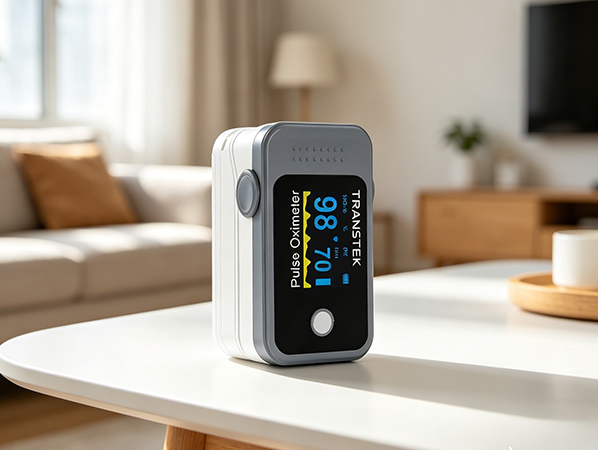
The Transtek Pulse Oximeter is designed to support home respiratory monitoring programs that require simple operation and automatic measurement transmission.
With built-in 4G connectivity, the device enables measurements to be shared without requiring smartphones, mobile applications, Wi-Fi configuration, or Bluetooth pairing. This streamlined workflow helps reduce technical barriers for patients while supporting more efficient remote monitoring programs.
The device measures both blood oxygen saturation (SpO₂) and pulse rate and features a 0.96-inch rotating OLED display for easy viewing. A one-button design simplifies operation, while its lightweight form factor supports convenient use in home environments.
According to product specifications, the device provides SpO₂ measurement accuracy of ±3% within the 70%–100% measurement range. Combined with automatic cellular transmission, these features make it suitable for RPM programs focused on respiratory monitoring and post-discharge follow-up.
For healthcare providers seeking to expand remote monitoring services, the Transtek Pulse Oximeter offers a practical solution that balances ease of use, connected monitoring capabilities, and deployment efficiency.
As Remote Patient Monitoring programs continue to expand, reducing technology barriers has become an important factor in supporting long-term patient participation.
Cellular pulse oximeters help simplify home respiratory monitoring by eliminating smartphone dependency and reducing the number of steps required after each measurement. With built-in 4G connectivity, measurements can be transmitted automatically, allowing healthcare providers to review respiratory trends without relying on mobile applications or manual reporting.
For patients, this creates a simpler monitoring experience. For healthcare providers, it supports more consistent measurement visibility and streamlined RPM operations.
As home-based care continues to grow, cellular pulse oximeters provide a practical approach to respiratory monitoring that combines ease of use, reliable connectivity, and scalable deployment for a wide range of RPM programs.
+86-0760-88282982