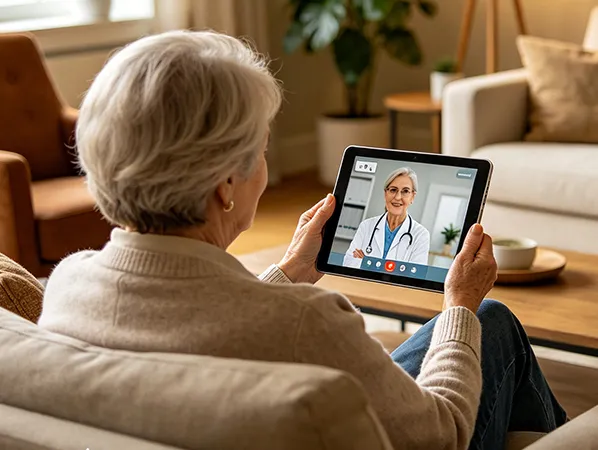
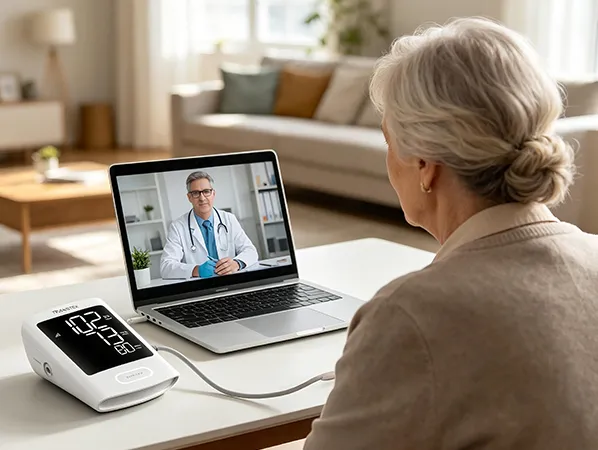
For a Remote Patient Monitoring (RPM) program, the challenge is not simply collecting accurate measurements. Those measurements also need to reach the clinical team as scheduled, without placing unnecessary technical demands on patients.
Connectivity can become a critical operational bottleneck. Patients may encounter Wi-Fi configuration issues, Bluetooth pairing problems, smartphone limitations, or unfamiliar applications. For programs serving older adults and patients managing chronic conditions, these additional steps can affect the overall monitoring experience.
This is where 4G medical devices for remote patient monitoring provide a distinct advantage. By integrating cellular connectivity directly into the device, they can reduce dependence on Wi-Fi, smartphones, and manual transmission.
The result is a simpler connectivity architecture that shifts more of the technical responsibility from the patient to the device.
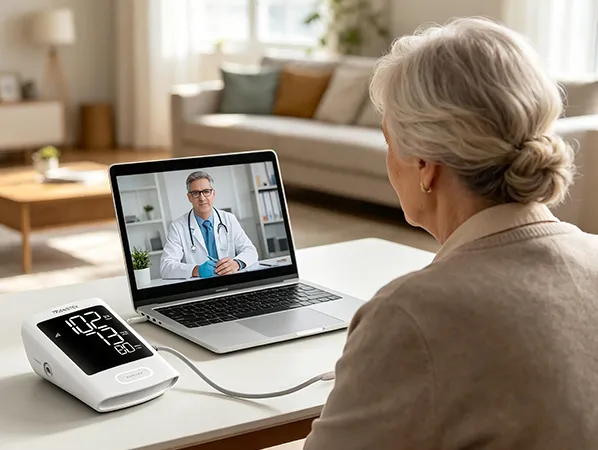
Many connected medical devices rely on technologies already familiar to consumers, but consumer connectivity is not always ideal for an RPM workflow.
Wi-Fi-based devices may require network configuration and a working home internet connection. Bluetooth-based workflows may involve smartphone pairing or a dedicated gateway, depending on the deployment architecture.
These requirements are not inherently problematic. In the right program, Bluetooth and gateway-based solutions can provide an effective way to connect multiple medical devices. However, when minimizing patient-side configuration is a priority, direct cellular connectivity offers a simpler alternative.
With a 4G RPM device, patients do not need to:
Configure home Wi-Fi
Pair a smartphone
Install an application for transmission
Manually upload measurements
This can be particularly valuable for remote patient monitoring for elderly populations, patients with limited digital experience, or programs operating across locations where home internet access varies.
How 4G Cellular Devices Work in RPM program
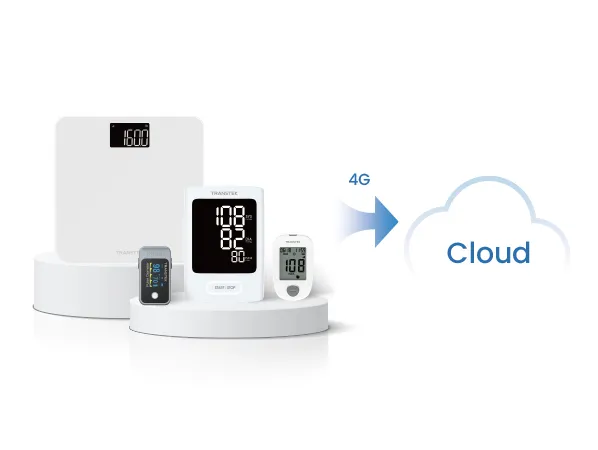
A direct cellular RPM workflow can be summarized as:
Measurement → Built-in cellular connection → Automatic transmission → Devices management dashboard → Measurement review
For RPM providers, the architecture can support a more standardized onboarding process by reducing the number of connectivity variables that need to be configured at the patient side.
This is the core value of cellular RPM devices: connectivity becomes part of the medical device rather than another task for the patient to manage.
The TeleRPM BPM Gen 2 Plus is a 4G blood pressure monitor for RPM with built-in SIM support and connectivity across AT&T, T-Mobile, and Verizon. Its 16–52 cm cuff range accommodates a broad range of patients, while intelligent retransmission helps support reliable measurement transmission.
For hypertension management, the combination of direct cellular connectivity and flexible cuff sizing can simplify deployment across diverse patient populations.
The TeleRPM BGM Gen 1 combines 4G connectivity with a streamlined glucose testing workflow. Patients can perform a measurement without smartphone pairing, while automatic transmission reduces the need for manual reporting.
The device uses an 8-electrode test strip with HCT correction technology and supports a 5-second testing time.
For diabetes RPM, this architecture connects the measurement process and transmission workflow with fewer patient-side steps.
The TeleRPM Scale Gen 2 supporting AT&T, T-Mobile, and Verizon networks. Its large platform and display support easier operation, while 4G connectivity enables automatic transmission without requiring a separate smartphone connection.
The scale is designed for applications including heart failure, liver cirrhosis, and obesity management.
For post-discharge and chronic disease monitoring, reducing the steps between weighing and transmission can help simplify routine patient workflows.
The TeleRPM Cellular Pulse Oximeter combines direct 4G connectivity with intelligent network switching and a lightweight 30 g design. It provides SpO₂ accuracy of ±3% within the specified measurement range.
For respiratory-focused programs, including COPD and post-discharge monitoring, a compact cellular pulse oximeter can support remote measurement without requiring patients to manage a separate connectivity device.
The operational value of 4G connectivity extends beyond patient convenience.
When fewer technical steps are required at the patient side,healthcare providers can potentially reduce connectivity-related support issues during onboarding and routine use. A simpler transmission workflow can also help programs maintain the measurement schedule required by their clinical and operational processes.
This matters for RPM reimbursement workflows. Under CPT 99454, CMS covers the supply of medical device(s) with daily recording or programmed alert transmission during the applicable 30-day period, subject to the requirements of the service.
Therefore, reliable automatic transmission is not simply a technical feature. It can be an important part of building an RPM workflow that supports applicable billing requirements.
For scalable RPM program deployment, healthcare providers should look beyond the connectivity module and consider the complete device lifecycle.
Key considerations include:
Pre-deployment provisioning
Devices can be activated and prepared before reaching patients, helping reduce setup requirements during onboarding.
Device lifecycle management
Healthcare providers should evaluate capabilities for monitoring device status, connectivity, battery condition, and other operational indicators.
Platform integration
API integration can help connect measurements with existing RPM platforms and clinical workflows.
Security and regulatory requirements
healthcare providers should evaluate applicable privacy, security, and medical-device regulatory requirements for the complete solution.
As deployment volumes grow, these capabilities can determine how efficiently an RPM provider manages devices across the patient lifecycle.
Direct cellular connectivity can remove Wi-Fi configuration, smartphone pairing, and manual transmission from the patient-side workflow, creating a simpler path from measurement to clinical review.
For healthcare providers, RPM service providers, and healthcare technology partners, this can help reduce deployment complexity while supporting scalable remote monitoring programs.
Contact the Transtek team to explore 4G medical devices and discuss your RPM deployment requirements.
+86-0760-88282982