Liver cirrhosis follow-up often requires long-term observation beyond scheduled clinic visits. For many patients, one of the most practical daily indicators is body weight. Weight changes may reflect nutrition, medication response, fluid status, or other health-related factors that require review by healthcare professionals.
In traditional follow-up, patients may be asked to record weight manually and report changes during appointments. However, manual logs are easy to forget, delayed, or recorded inconsistently. This can create gaps between home care and clinical review.
A 4G RPM weight scale provides a more connected approach. By automatically transmitting weight data to a remote monitoring workflow, it helps care teams observe trends more consistently. For liver cirrhosis follow-up, this type of remote weight monitoring can support better visibility between visits, especially when patients need ongoing observation of fluid-related weight changes.
Liver cirrhosis can be associated with complications that require careful follow-up, including ascites, edema, and fluid balance changes. Weight monitoring does not diagnose these conditions, but it can provide useful trend information when combined with clinical evaluation and other medical data.
According to the American Association for the Study of Liver Diseases (AASLD), outpatient management of cirrhosis with ascites includes sodium restriction, diuretic consideration, and monitoring daily weights.
A feasibility study published in JMIR Medical Informatics and available through PubMed Central states that body weight is a reliable proxy for ascites volume and that daily weight monitoring is recommended to support ascites management.
For patients managing liver cirrhosis at home, regular weight data can help care teams understand whether a change is isolated or part of a longer pattern. Instead of relying only on memory or occasional clinic measurements, remote weight monitoring provides a more consistent record of changes over time.
Key reasons weight trend monitoring matters include:
It supports review of changes between scheduled visits.
It helps care teams compare daily measurements over time.
It reduces reliance on memory-based or delayed patient reporting.
It provides a practical home indicator that can be reviewed alongside symptoms and clinical data.
Fluid-related weight changes are one reason body weight is closely observed in liver cirrhosis follow-up. In patients with ascites or volume overload, body weight may change as fluid accumulates or decreases. This makes body weight a practical home-based indicator for trend review, although it should always be interpreted by healthcare professionals together with symptoms and clinical findings.
The American Gastroenterological Association (AGA) notes that management of ascites, hepatic hydrothorax, or volume overload in cirrhosis may involve dose escalation guided by symptoms, weight, urine output, and electrolyte or renal monitoring.
This is why weight trend monitoring should not be treated as simple fitness tracking. In liver cirrhosis follow-up, the value of weight data is not only the number on the scale. The value comes from repeated measurements, consistent timing, and the ability to review trends across days or weeks.
A cellular weight scale can help support this process by reducing the need for patients to manually report every measurement. When weight data is automatically transmitted, care teams can review changes with less dependence on handwritten logs or delayed patient communication.
Manual weight logs are still used in many home care settings, but they have limitations. Patients may forget to weigh themselves, write down the wrong value, measure at different times of day, or bring incomplete records to appointments. For older adults or patients managing multiple conditions, these steps can become difficult to maintain consistently.
Manual reporting also creates delay. If a patient records several days of weight changes but does not share them until the next appointment, the care team may not have timely visibility. In liver cirrhosis follow-up, delayed information can reduce the practical value of home monitoring.
Remote Patient Monitoring changes this workflow by helping weight data move from the home to the monitoring platform more efficiently. A remote patient monitoring weight scale can reduce manual entry, lower the chance of missing records, and support more continuous review.
This does not mean the device replaces clinical judgment. Instead, it helps provide a more complete data record for healthcare professionals to interpret. The patient still follows the care plan provided by clinicians, while the device supports more reliable data collection between visits.
A 4G weight scale is useful because it reduces several common barriers in home monitoring. Unlike a traditional scale, it is designed to transmit weight data automatically through cellular connectivity. This can be especially helpful for patients who do not want to use mobile apps, Bluetooth pairing, Wi-Fi setup, or manual uploads.
Measurement continuity is important in liver cirrhosis follow-up because care teams need to understand changes over time. A single weight measurement may be less useful without context. Repeated measurements can show whether the patient’s weight is stable, gradually increasing, decreasing, or fluctuating.
For RPM programs, cellular connectivity also supports scalability. When weight data is transmitted automatically, care teams can manage larger patient groups with less manual follow-up. Instead of calling patients simply to ask whether they weighed themselves, staff can focus on reviewing data patterns and identifying patients who may require attention.
This type of workflow is particularly useful when remote monitoring programs include patients with chronic conditions that require long-term observation. A 4G weight scale helps turn home weight measurements into structured remote weighing data that can support ongoing care coordination.
When selecting a cellular weight scale for remote monitoring programs, healthcare teams should look beyond basic weighing function. The device should support real home care workflows, especially for patients who may need long-term monitoring.
Important features to evaluate include:
Automatic data synchronization to reduce manual entry.
Cellular connectivity to reduce dependence on apps or home Wi-Fi.
Stable measurement performance for long-term trend review.
Simple step-on operation for daily home use.
Platform compatibility for remote monitoring workflows.
A patient-friendly display and clear operating process.
For liver cirrhosis follow-up, consistency is especially important because the value of weight monitoring comes from repeated measurements over time. A well-designed RPM weight scale should make the monitoring process easier for both patients and care teams. Patients should not need to manage complicated technical steps, while care teams should receive reliable data that can be reviewed within the monitoring workflow.
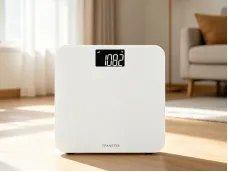
The TeleRPM Scale Gen 2 can support chronic condition management scenarios including congestive heart failure, liver cirrhosis, and obesity-related issues by delivering accurate weight data to a health monitoring platform for real-time tracking.
The device supports AT&T, T-Mobile, and Verizon networks, helping patients complete measurements with cellular data transmission instead of relying on smartphone setup. It also supports automatic data synchronization, allowing weight data to move into the monitoring workflow with less manual operation.
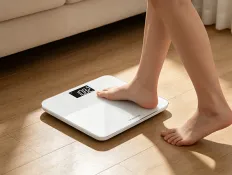
For measurement reliability, TeleRPM Scale Gen 2 is presented with a medical-grade quality management system, patented sensor technology, and FDA-cleared weight scale device information. Its step-on measurement design and auto-sync workflow also make it suitable for home use, especially when patients need simple daily monitoring.
In liver cirrhosis follow-up, consistent weight trend monitoring can help care teams maintain better visibility between visits. Transtek TeleRPM Scale Gen 2 supports this need by combining cellular connectivity, automatic synchronization, medical-grade measurement design, and patient-friendly operation. As remote care programs continue to expand, 4G RPM weight scales can play an important role in helping weight data become more timely, structured, and useful for chronic condition follow-up.
Liver cirrhosis follow-up often requires ongoing observation, and weight trend monitoring is an important part of that process. While a weight scale cannot diagnose or treat liver cirrhosis, consistent body weight data can help care teams review changes related to fluid status, medication response, and long-term home monitoring patterns.
Compared with manual logs, a 4G RPM weight scale provides a more reliable way to collect and transmit weight data from the patient’s home. By supporting automatic synchronization and cellular connectivity, Transtek TeleRPM Scale Gen 2 helps make remote weight monitoring easier for patients and more scalable for healthcare teams.
+86-0760-88282982